
What to Expect in Your First Yoga Class at Rahasya Yoga
An honest walkthrough of what your first yoga class looks like at Rahasya Yoga in New Hill, NC. From the first conversation to the closing breath, exactly what happens and why.
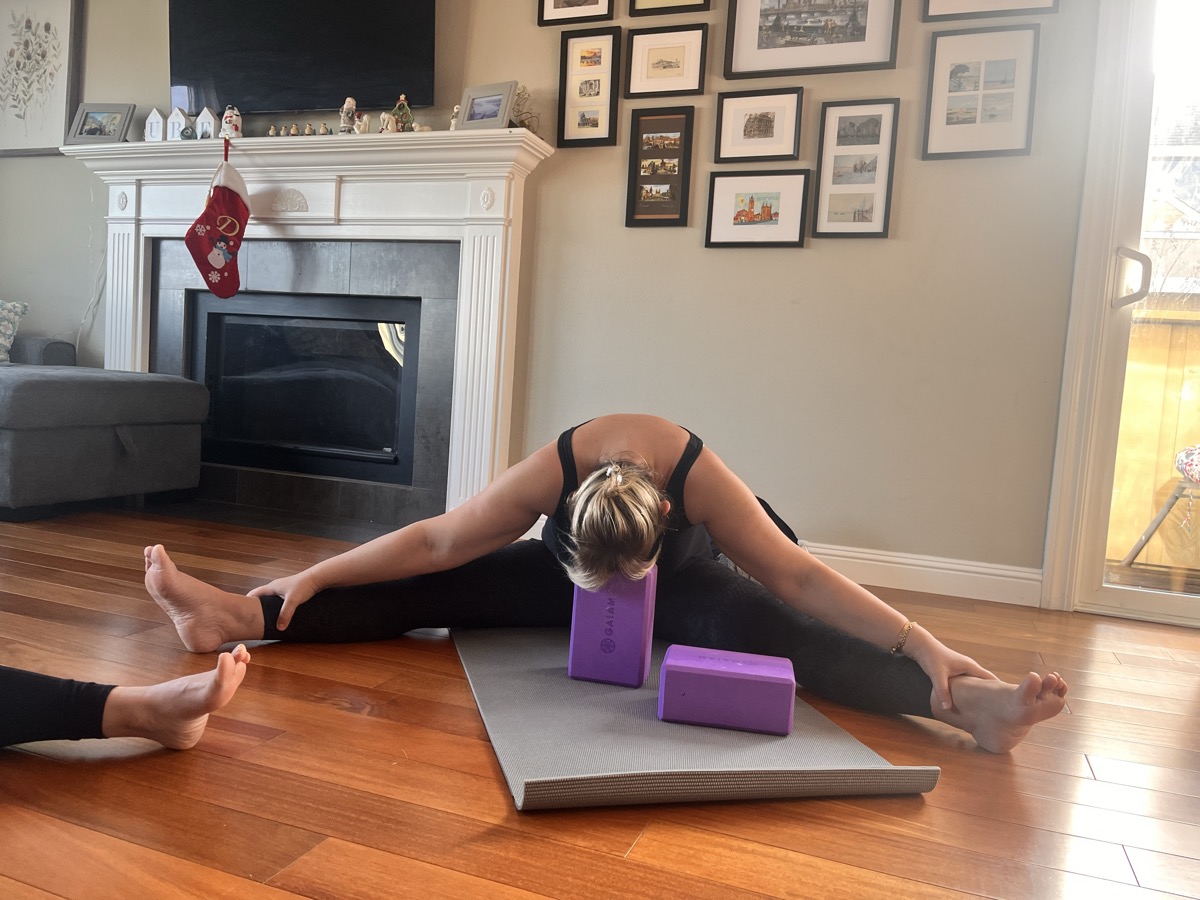
If you have booked a first class with me and you are reading this the night before, hello. The fact that you are looking up what to expect is normal — and useful. The more you know about what is going to happen, the less of your attention you spend on uncertainty during the class, and the more you can spend in your body. That is the entire reason for this post.
Here is exactly what happens in a first session.
Before the class
You will get a short message from me a day before. Confirming time, location, and any details we discussed when you booked. I will ask one or two practical things: any injuries, anything you would like to focus on, anything I should know.
You do not need to respond at length. I sit all day at a desk and my low back hurts is plenty. The conversation will continue when we meet.
What to wear. Leggings or any pants you can move and stretch in. A fitted top — loose shirts ride up when you fold forward, which is uncomfortable. You will practice barefoot. That is the whole dress code.
What to bring. Nothing, unless you want to. I will bring a mat, blocks, a strap, and a bolster. If you prefer your own mat for hygiene or familiarity, please use it.
What to eat. Nothing within two hours of class. A light snack before that is fine. Avoid coffee right beforehand — it tends to make the breath choppy.
The first ten minutes — conversation
Your first class starts with you sitting. Not on a mat. On a couch, a chair, the floor — wherever feels comfortable. We talk.
I will ask things like:
- What does your body do for a living? (How do you sit, stand, sleep, carry things?)
- Any injuries, surgeries, or chronic pain?
- What made you want to start yoga now?
- Anything that has worked or not worked in the past?
You are not being assessed. I am gathering signal. The questions are practical — what I learn here shapes the next fifty minutes. A student with a torn rotator cuff and a student with a chronically anxious nervous system get the same hour of yoga shaped two different ways.
This is also the part where you can ask anything. Do I have to do everything you say? (No.) What if I cannot do a pose? (We change it.) What if I have to leave to use the bathroom? (Please do.) What if my mind wanders? (It will.) None of these questions are odd. All of them are common.
The next thirty to forty minutes — the practice
We start slow. Almost always lying down or seated, with attention on the breath. Three to five minutes of just noticing where the air goes when you inhale.
For new students, this part is often the most surprising. People expect to be moving immediately. The slowness is intentional. The nervous system needs a few minutes to recognize that the next hour is going to be different from the rest of the day. If we skip those minutes, the body stays in the same state it walked in with — and the practice does not land.
After breath, we begin to move:
- Small spinal movements — cat-cow, gentle twists, side bends. Waking up the back.
- Basic standing postures — mountain pose, forward folds, a soft warrior. Nothing fancy. We focus on weight distribution and breath, not on shape.
- One or two seated poses — usually a forward fold, a twist, and a hip opener. Held for several breaths each.
- Wind-down — a few minutes on your back, sometimes legs against a wall, sometimes a simple knees-to-chest.
The whole arc is build-up, sustain, wind-down. Like a wave. By the time we get to the wind-down, most first-time students realize they have been moving for thirty minutes and feel less stiff than they have in weeks.
If you cannot do something, we change it. If something hurts in the wrong way (you will learn the difference between good stretch and no), we stop. I am not testing you. There is no version of class where you are doing it wrong.
The last five to seven minutes — savasana
This is the part everyone secretly waits for, even if they will not admit it.
Savasana is lying flat on your back, arms a little away from your sides, palms up, eyes closed. You are not doing anything. You are letting the body absorb what just happened.
I will sometimes guide a short body scan — naming parts of the body and inviting you to release them. I will sometimes just stay quiet. The room stays warm. Time gets a little soft.
Some people fall asleep. That is fine. Some people experience an unexpected wave of emotion. That is also fine; the body holds a lot, and yoga loosens it. Some people just feel very, very quiet. Whatever happens is the right thing.
When it is time to come up, I will guide you back slowly. We do not jump up. We roll to the side, sit, and take a breath together.
After the class — the next 24 hours
This part nobody talks about, so I will.
You will feel light for an hour or two. A small openness in the shoulders and the chest. Sleep that night is usually good.
The next day, you may feel a little sore. Small muscles you have not asked to do anything in a while will let you know they exist. This is normal and short-lived. Drink water.
Around 48 hours later, the soreness lifts and a small, slightly surprising thing happens: you notice the practice carrying into your day. You catch yourself standing in line at the post office breathing more slowly. You notice your shoulders are not glued to your ears at 4 PM. This is what regular practice gives you. The class is the seed; the rest of the week is the bloom.
What changes if you come back
After three sessions, most students start to notice a pattern:
- Sleep is slightly better.
- Standing up after sitting feels easier.
- The mental noise during stressful moments is a little quieter, and slightly slower.
- The breath becomes available as a tool you did not have before.
I do not need you to commit to anything beyond your first class. Come once. See how you feel. Decide from there.
If you want to discuss anything before your session — questions, concerns, what to wear, what time is best — send me a message or WhatsApp. The answers are short and personal.
See you on the mat.
— Gizem