
Starting Yoga in New Hill, NC — A Beginner's Honest Guide
A practical, judgment-free guide to starting yoga in New Hill and the Raleigh-Durham Triangle. What to bring, what to expect, and what no one tells you about your first class.
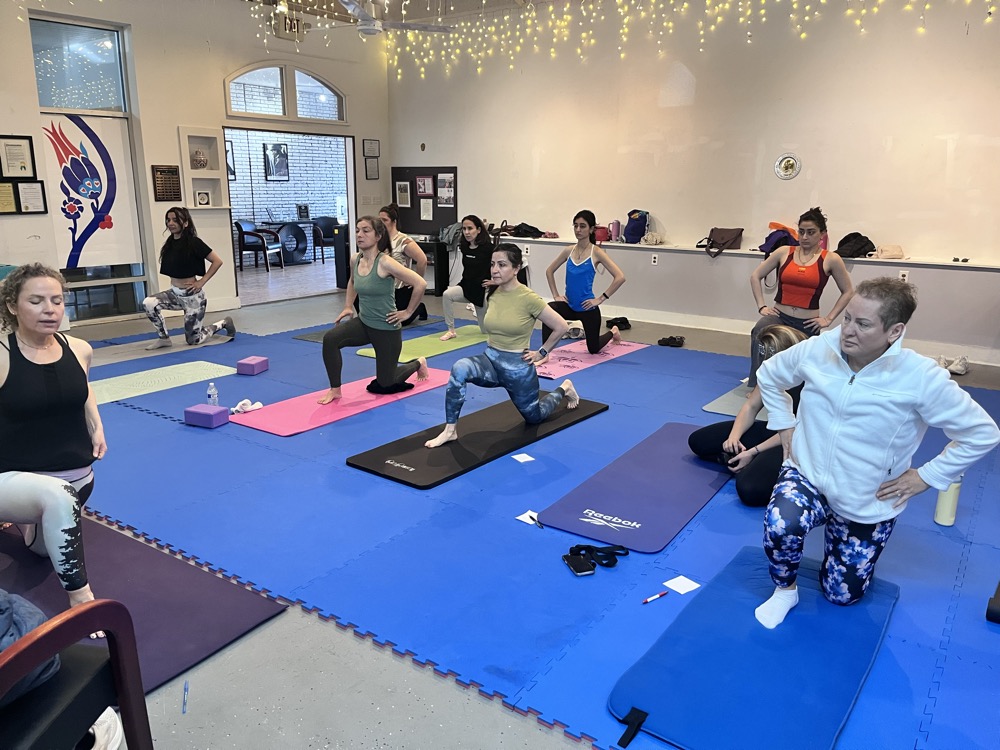
If you have been thinking about starting yoga in New Hill or the wider Raleigh-Durham Triangle, this guide is written for you. Not the version of you who is already flexible, who can touch their toes, who breathes through their nose like a monk. The actual you — the one who maybe has a stiff back, a busy week, and a small voice that says I don’t want to embarrass myself in a room full of pretzels.
Here is the truth, from someone who has been teaching for fifteen years: everyone who has ever practiced yoga started exactly where you are. Including the ones who now move like water.
What yoga actually is (and isn’t)
Yoga is not about flexibility, weight loss, or looking peaceful in photographs. It is a practice of paying attention — to your breath, to your body, to the small honest signals your nervous system is sending all day that you usually drown out with noise.
The postures are scaffolding. They are not the point. The point is what happens between the postures — in the breath, in the stillness, in the moment you decide to stay one breath longer than you wanted to.
In Sanskrit, the word rahasya means the inner mystery — the part of the practice you can only learn by stepping onto the mat. No book, no video, no Instagram reel will teach it. That is also good news: you cannot study your way out of starting.
What you actually need
Less than you think.
- A mat. If you do not own one, do not buy one yet. Most studios and most teachers (myself included) bring mats for first-timers. Try a class first, then decide.
- Comfortable clothing. Leggings or athletic pants. A fitted top — loose shirts ride up when you are upside down, which is awkward. That is it.
- A bottle of water. Optional but kind to your future self.
That is the whole list. Not props, not blocks, not a special outfit. You will hear about all of those things eventually. For your first class, you do not need any of them.
What to expect in your first session
If you are coming to a private session with me, the first ten minutes are conversation. I want to know what your body is dealing with — injuries, surgeries, chronic tightness, what you do for work, how you sleep, what you are hoping to feel different. Not to prescribe. To listen.
Then we move. Slowly. We do not start with anything you have seen on social media. We start with breath in your ribs, with weight in your feet, with a few small movements to wake up the spine. That is often the entire first half of the class. People sometimes tell me they expected to be sweating by minute ten. The opposite is the design — the slower we begin, the more your nervous system trusts what is happening.
By the end of a sixty-minute first session, most students leave with three things: a clearer sense of their own breath, a slightly looser back, and the small surprise of that was nothing like I thought it would be.
Why New Hill and the Triangle work for new students
You are in a quietly perfect part of the country to start. The Raleigh-Durham Triangle has a deep community of teachers, no traffic stress, and a slower pace than the bigger metros. You do not need to drive to a downtown studio in Friday rush hour to begin practicing. I teach in homes, offices, churches, community centers, and outdoors across New Hill, Apex, Cary, Morrisville, Raleigh, and Durham. Your first class can happen in your living room.
That matters more than people realize. The hardest part of starting is the friction — finding parking, walking into an unfamiliar studio, performing the role of someone who does yoga before you have even unrolled your mat. When the practice comes to your space, that friction disappears. You are not a guest. You are at home.
The three things no one tells beginners
- You will not be the worst person in the room. That sentence is for the part of you that is convinced you will be. You will not. Mostly because the rest of the room is paying attention to themselves, not you. Yoga rooms are extraordinarily uncompetitive — partly by design, partly because everyone is too occupied with their own hamstrings.
- You will not “get good” in three classes. You will get different. Three classes in, your shoulders will sit lower. Your breath will be slightly longer. You will catch yourself standing in line at the grocery store and notice your feet on the floor for the first time in a decade. That is the thing yoga gives you. Speed is not part of it.
- The hard postures are not the achievement. The achievement is showing up on a day you did not want to. Standing on your mat with a body that feels heavy and tired and breathing anyway. The poses that look impressive on the internet are a side effect of consistency. They are not what the practice is for.
How to actually start
Three ways, in order of how much commitment they require:
- Send a message. WhatsApp, email, or the contact page — just write what you are dealing with and what you are hoping for. I respond personally. There is no booking pressure.
- Book a single private session. Sixty or seventy-five minutes. In your home, your workplace, or virtually. No package, no membership.
- Join a group class. I teach at several venues across the Triangle. Smaller, lower commitment, lower cost.
If you are reading this and have read this far, the part of you that is interested has already done most of the work. The rest is just one date on a calendar.
Welcome.
— Gizem